Point-of-entry filtration: treating water for the whole house
Point-of-entry (POE) filtration treats water where the supply line enters the building, so every tap, shower, and appliance downstream receives the same conditioned water. It contrasts with point-of-use (POU) treatment, which sits at a single fixture such as the kitchen sink. POE systems are typically chosen to protect plumbing and to address taste, odour, or sediment that affects the entire household.
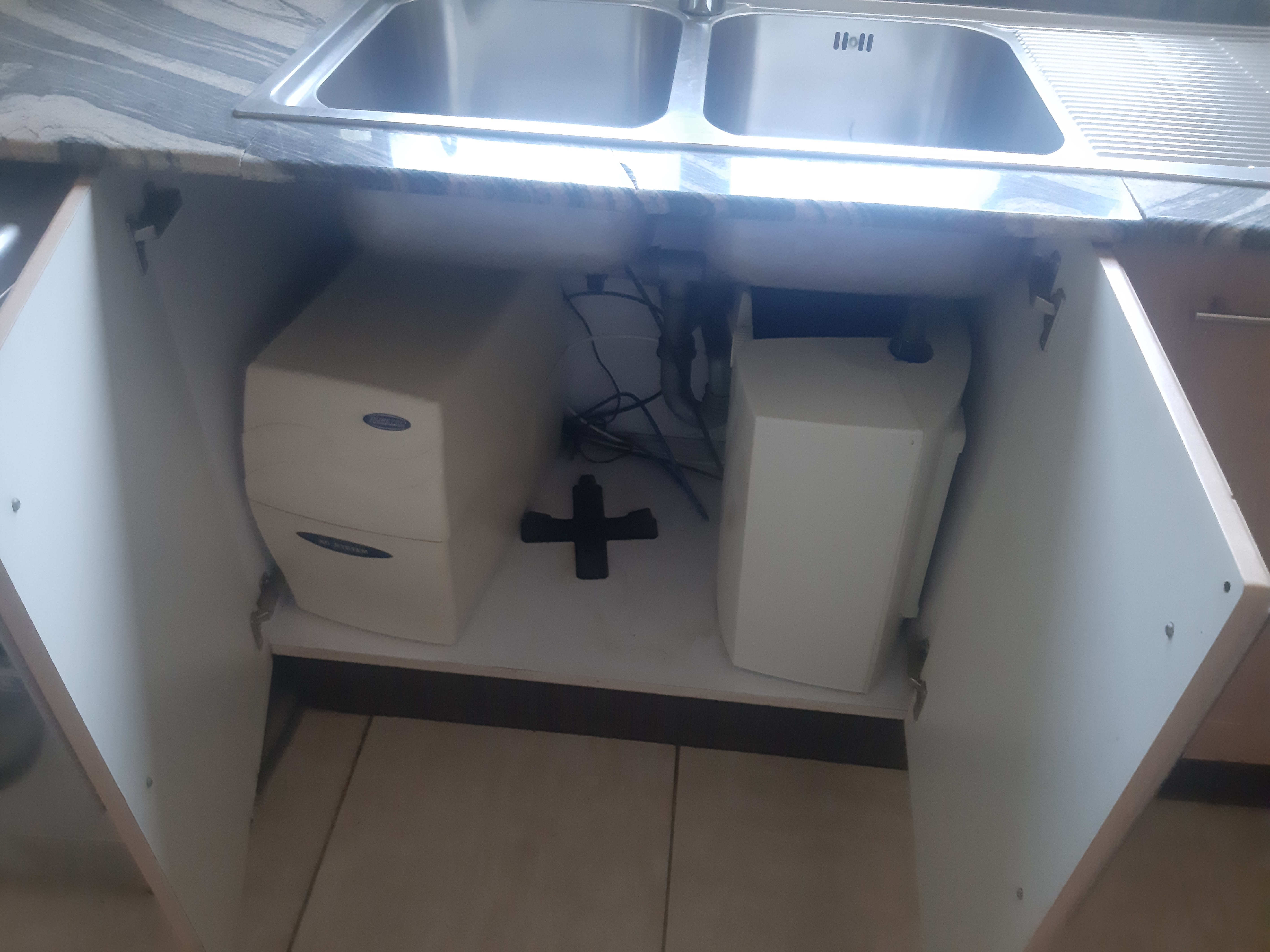
The common treatment stages
Most residential POE setups are built from a sequence of stages, each handling a different fraction of what is in the water:
- Sediment pre-filter: a pleated or spun cartridge that captures sand, rust flakes, and silt. It is placed first so that finer media downstream are not clogged prematurely.
- Activated carbon: granular or block carbon that adsorbs chlorine, some taste-and-odour compounds, and certain organic contaminants.
- Optional specialty media: media chosen for a specific local concern, such as iron or manganese, when a water test indicates it.

What POE filtration does not do
A carbon-and-sediment POE system is not a softener and not a disinfection step. It does not remove the dissolved calcium and magnesium that cause scale, and it is not a substitute for the treatment a municipal utility already applies. Households on private wells should base any disinfection decision on a microbiological test rather than on a general-purpose filter.
Sizing and flow rate
POE systems are sized to the household peak flow so that filtration does not throttle showers or simultaneous fixtures. Cartridge housings are rated for a service flow in litres per minute, and undersizing leads to pressure drops during busy periods. A plumber typically estimates peak demand from the number of fixtures and bathrooms before selecting housing size.
Maintenance rhythm
| Component | Typical attention | Sign it is due |
|---|---|---|
| Sediment cartridge | Periodic replacement | Visible discolouration or pressure drop |
| Carbon cartridge | Replacement on a schedule | Return of chlorine taste or odour |
| Housings and O-rings | Inspection at each change | Seepage at the housing seam |
Replacement intervals depend on water quality and usage, so manufacturer guidance and observed performance both matter. A pressure gauge before and after the filter bank makes it easy to see when media are loading up.
Related reading
If scale on fixtures is the main concern, the hard water and testing note explains how to read a hardness report. For managing those minerals directly, see the water softening note.